
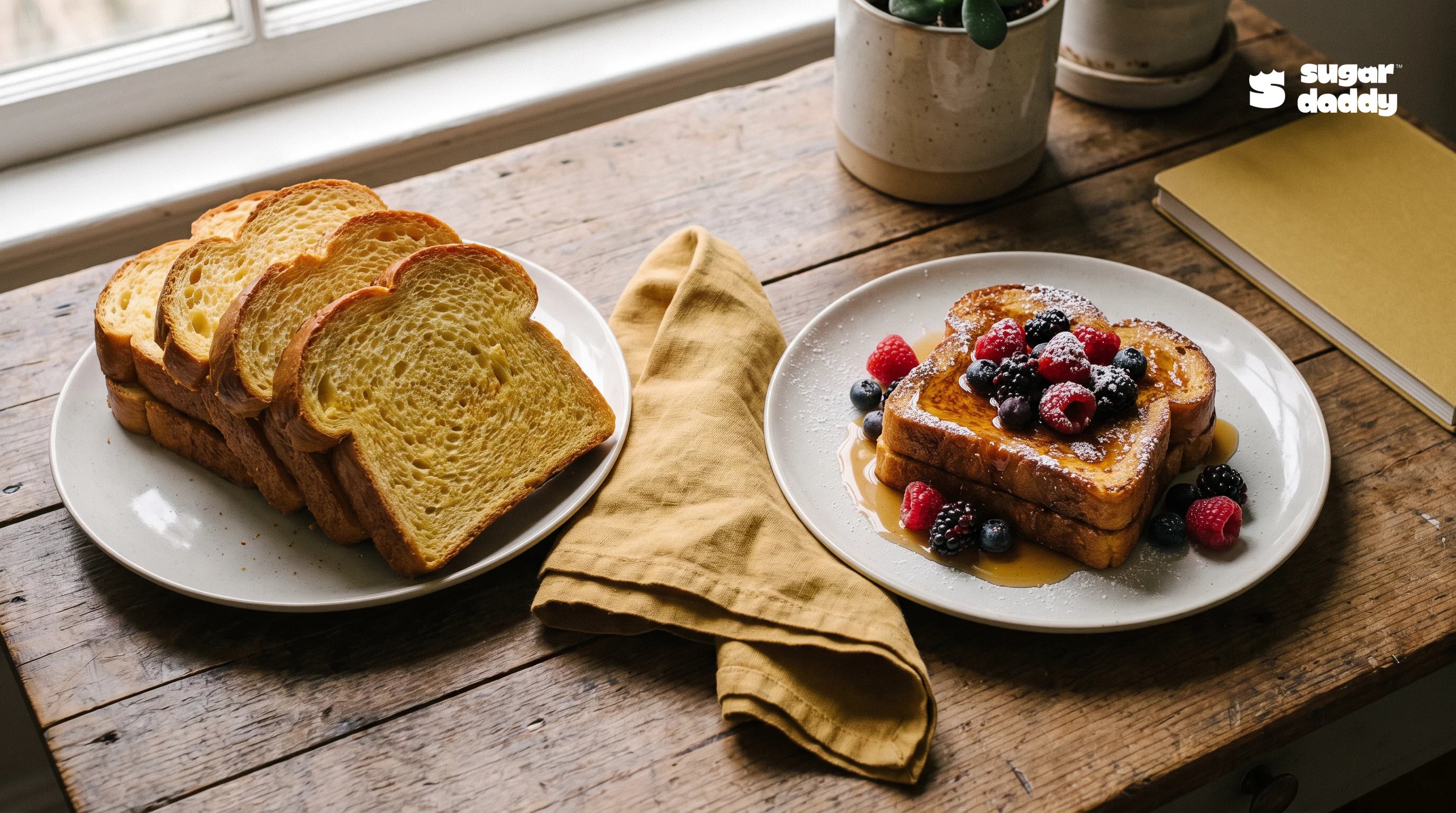
Staring at a late-night dessert menu and trying to decide between brioche vs. French toast comes down to choosing between a premium, butter-rich ingredient and a fully prepared, caramelized masterpiece. Understanding the differences in crumb structure, moisture absorption, and flavor profiles helps you choose the exact level of sweetness and texture your craving demands. While brioche is a golden, egg-enriched bread that shines on its own, it also serves as the ultimate structural foundation for French toast, transforming the dish into a rich, pudding-like dessert.
Brioche vs. French Toast: Understanding the Core Differences
Brioche and French toast belong to entirely different culinary categories. One is a foundational bakery masterpiece, while the other is a fully prepared warm meal. Understanding this distinction is the first step to finding exactly what your sweet tooth is asking for.
Brioche is a highly enriched French bread crafted with a generous amount of butter and eggs, giving it a golden, pillow-soft crumb and a subtly sweet flavor. Though delicious on its own, you can delve deeper into whether brioche is a dessert in its own right or simply the ultimate canvas for other sweet creations.
French Toast is a completed culinary dish made by soaking slices of bread in a seasoned egg-and-milk custard, then pan-frying or baking the slices until golden and caramelized. While you can use almost any sliced loaf to make this dish, brioche remains the gold standard. They are not interchangeable terms; rather, one is the premium ingredient, and the other is the warm, indulgent dessert that results from it.
What Makes Brioche Unique?
What sets brioche apart from your standard loaf of bread is its high concentration of butter and eggs. In the baking world, this makes it an enriched dough. While a basic loaf relies solely on flour, water, yeast, and salt, brioche incorporates fat and dairy directly into the mixing process. This heavy enrichment creates an incredibly tender, cake-like crumb that feels pillow-soft.
This fat-rich composition also gives brioche its characteristic golden color and a delicate, natural sweetness. It carries a deep, buttery flavor profile that sits comfortably on the fine line between bread and pastry. While this make-up makes it versatile enough to elevate savory dishes, it remains a powerhouse for desserts, absorbing syrups and sauces without turning into mush.
The Allure of French Toast: A Culinary Canvas
French toast transforms simple bread into a comforting, custard-filled delight by soaking slices in a mixture of whisked eggs, milk, and warm spices like cinnamon or vanilla. Once the liquid is fully absorbed, the bread is pan-fried until the exterior achieves a golden-brown, caramelized crust while the inside remains pillowy and warm. Served with a drizzle of syrup, a dusting of powdered sugar, or a dollop of whipped cream, it bridges the gap between a morning staple and an indulgent late-night treat.
While you can make this dish with almost any sliced loaf, the type of bread you choose determines the success of the texture. Thinly sliced white bread often collapses under the weight of the egg mixture, whereas dense or enriched breads provide the structural integrity needed to soak up the liquid without turning soggy. Elevating this classic recipe with premium ingredients elevates the entire experience, making it stand alongside other French desserts worth exploring when you want to satisfy a serious sweet craving.
Why Brioche is the Star for French Toast
Standard sliced bread easily surrenders under the weight of a heavy custard soak, often turning into a sad, mushy mess before it even hits the pan. Brioche steps up as the undisputed champion of the griddle, transforming the simple concept of French toast into a decadent, dessert-quality experience.
Texture: The Perfect Balance
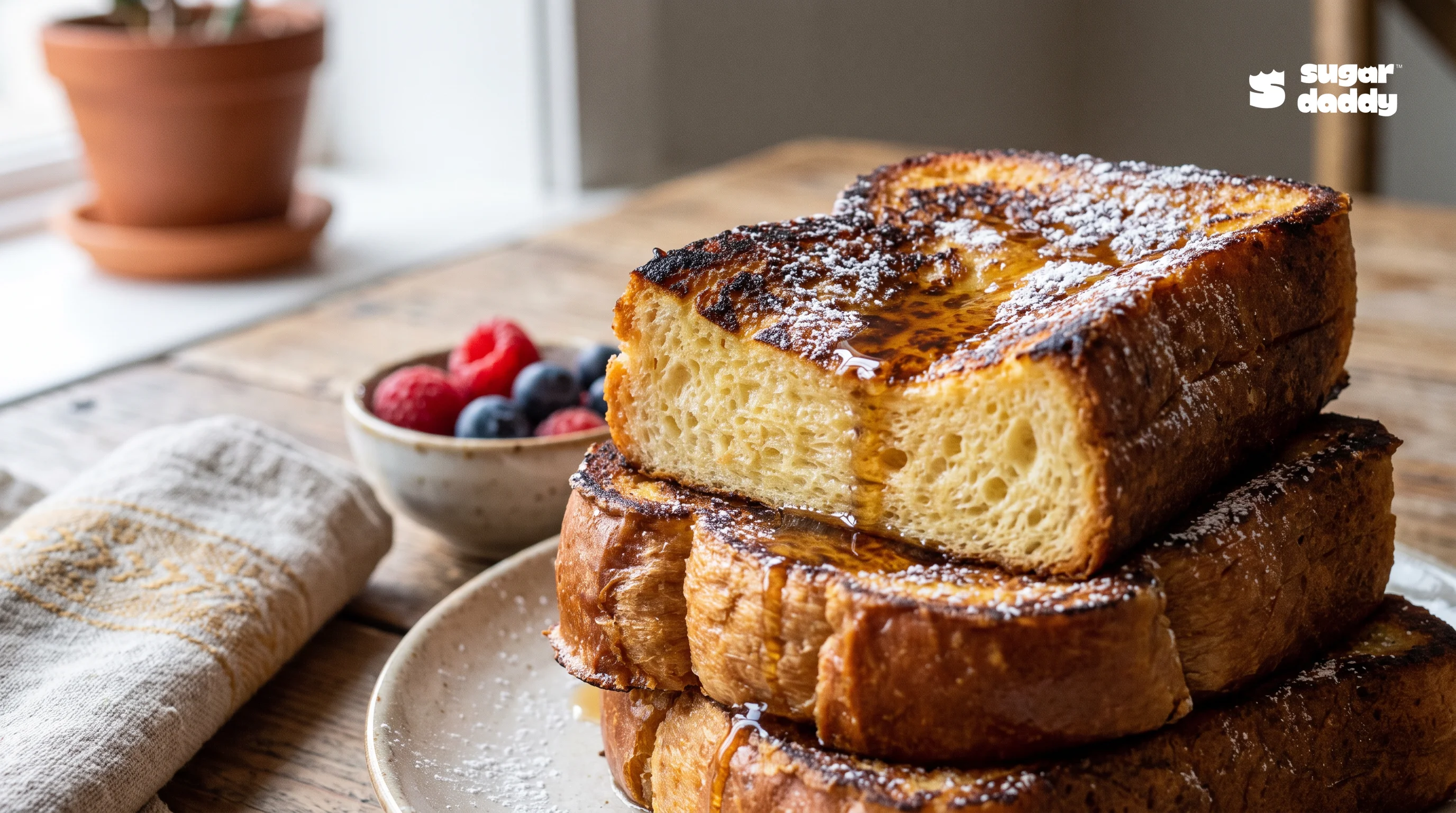
An exceptional French toast relies entirely on textural contrast. The high egg and butter content in brioche allows the exterior of the slice to crisp up beautifully when it contacts a hot, buttered skillet. This creates a caramelized, golden crust that seals in a warm, pillowy interior resembling a delicate bread pudding.
Flavor: A Match Made in Heaven
While standard bread acts merely as a blank carrier, brioche actively participates in the overall flavor profile. Its inherent buttery sweetness complements the warm vanilla, sugar, and cinnamon in the custard soak. Instead of masking the bread, the custard elevates the rich pastry notes already baked deep into the loaf.
Absorption: Avoiding the Soggy Pitfall
Because brioche features a tight, sturdy crumb structure, it behaves like a highly engineered sponge. It pulls the liquid custard deeply into its center without breaking down or dissolving. This leaves you with a fully saturated slice that holds its structural integrity from the soaking bowl to the frying pan, and finally to your late-night dessert plate.
Brioche vs. French Toast: Choosing Your Sweet Indulgence
Choosing between a slice of pure brioche and a freshly prepared plate of brioche French toast comes down to mapping your current craving to the right culinary experience. While both options satisfy a sweet tooth, they deliver entirely different sensations on the palate. If you are stuck at a crossroads, you can use a framework for choosing the best dessert based on what your senses are calling for in the moment.
A plain, high-quality brioche focuses on the natural, buttery lightness of the baked dough itself. It is the perfect choice when you want a quick, clean bite that does not feel overly heavy. French toast, on the other hand, is a fully realized dessert event. The custard soak transforms the structural integrity of the bread, turning it into a rich, pudding-like center surrounded by a caramelized crust. If you want something in between, a simple toasted slice paired with some ideas for the best brioche toppings can easily bridge the gap between sweet and savory brioche.
To help you decide which path to take for your next late-night treat, consider these decision criteria:
- Your desired texture profile: Opt for brioche on its own if you crave a light, pillowy, and airy bite, or choose French toast if you want a dense, warm, and custardy center.
- The intensity of sweetness and flavor: Select plain or lightly toasted brioche to highlight simple, yeast-forward buttery notes, or go for French toast when you want rich vanilla, cinnamon, and caramelized sugar flavors.
- The dining occasion: Pick a slice of brioche for a quick, low-effort evening snack, whereas brioche French toast fits a sit-down, indulgent late-night dessert experience.
Beyond the Basics: Topping Your Brioche French Toast
The rich, custardy foundation of brioche French toast makes it an ideal canvas for a wide range of toppings, allowing you to customize your dessert to match your exact mood. You can never go wrong with the classics. A simple drizzle of pure maple syrup, a light dusting of powdered sugar, and a handful of fresh berries work beautifully to balance the deep, buttery notes of the bread.
When a late-night craving demands indulgence, heavy toppings transform the dish into a restaurant-style dessert. Consider smothering your warm slices in whipped cream, rich chocolate sauce, and caramelized bananas. You can also explore more Nutella banana dessert ideas to find your favorite sweet combination.
If you prefer a savory-sweet contrast, brioche French toast adapts easily to a hearty brunch-style experience. Adding crispy bacon or a runny fried egg on top creates a satisfying interplay of salt, fat, and subtle sweetness that keeps you coming back for another bite.
Choose a slice of fresh brioche when you want a light, buttery snack, but opt for French toast when your craving demands a warm, caramelized, and custardy dessert. If you want a quick compromise, a thick slice of toasted brioche topped with sweet spreads provides a rich experience without the heavy egg soak. When those late-night cravings strike in Da Nang, you can skip the kitchen prep and have warm, indulgent sweet treats delivered straight to your door until 3 AM.