
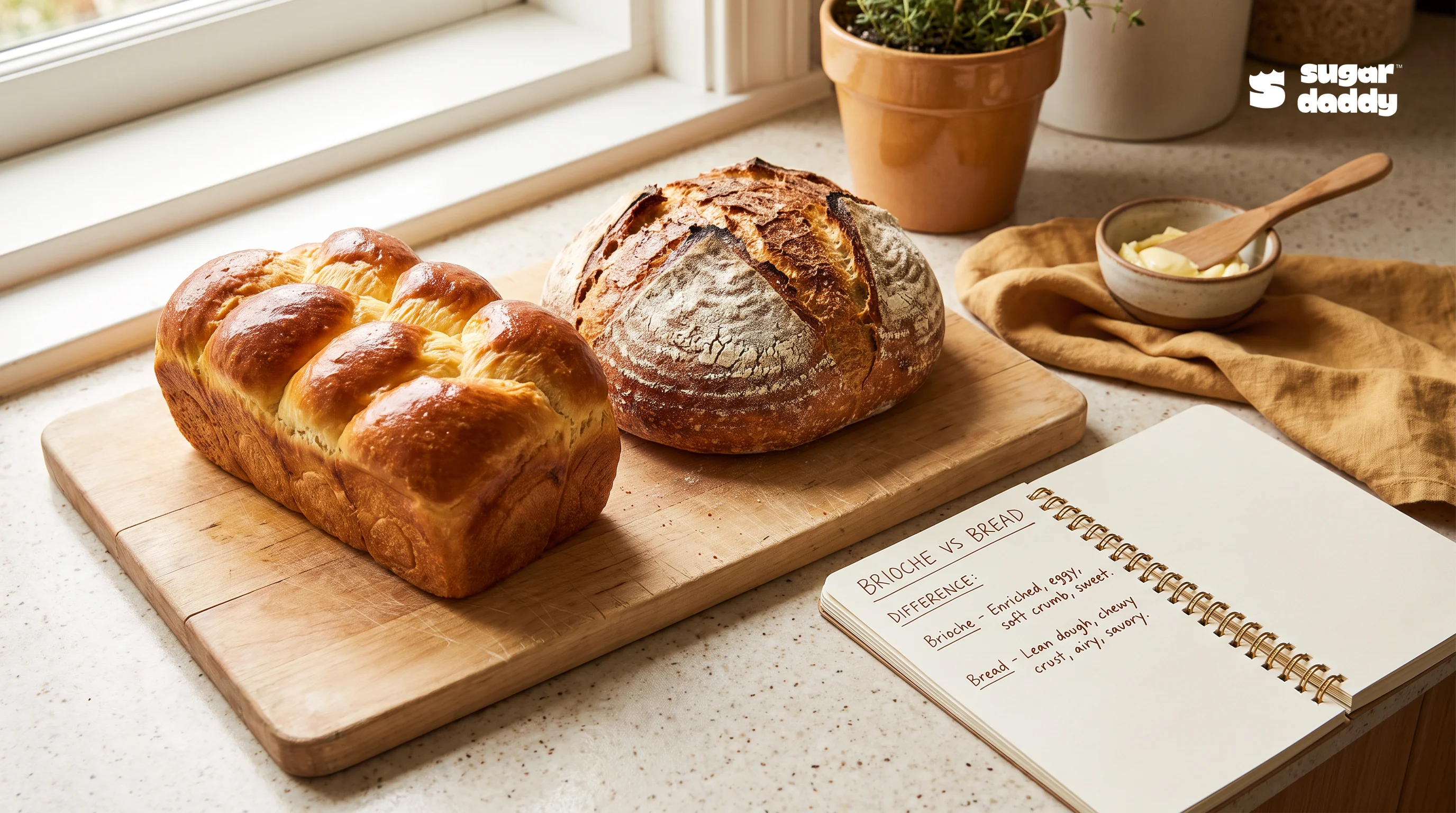
Deciding between brioche vs. bread usually comes down to whether you want a basic vessel for a sandwich or a rich, melt-in-your-mouth experience that feels like a genuine treat. You can easily tell them apart by looking at how the addition of butter, eggs, and sugar transforms a simple yeast dough into a delicate pastry hybrid. While standard loaves provide the structure needed for heavy daily meals, brioche delivers an indulgent, pillowy crumb that elevates any sweet craving or late-night dessert.
Beyond the Basics: What Makes Brioche Distinct from Regular Bread?
A slice of white toast and a golden, pillowy slice of brioche might look like cousins from a distance, but they belong to different culinary worlds. Standard bread relies on a straightforward, utilitarian formula of flour, water, yeast, and salt. It is structural, dependable, and designed to support other ingredients with its sturdy, chewy crumb.
Brioche takes a different path. This French classic bridges the gap between traditional bread and delicate pastry. The core difference lies in the generous addition of eggs and butter, which transforms the dough into an ultra-rich, tender, and subtly sweet masterpiece that melts in your mouth.
The Ingredient Story: Butter, Eggs, and Sugar – The Brioche Trinity
Standard bread is built on a minimalist foundation. To make a classic loaf, a baker needs only flour, water, yeast, and salt. These simple components work together to build a strong gluten network, resulting in the familiar, chewy structure we expect from a daily sandwich slice or a rustic baguette.
Brioche turns this minimalist approach on its head by introducing a heavy dose of dairy and fat. The dough is enriched with generous amounts of butter and whole eggs. This enrichment coats the gluten strands, softening the dough to produce an incredibly tender crumb that melts on your tongue.
Many brioche recipes also incorporate a touch of sugar directly into the mix. This does not just feed the yeast; it elevates the flavor profile, giving the crumb its signature, gentle sweetness. When baked, these sugars caramelize alongside the butter, creating that beautiful, deep golden crust.
Texture and Crumb: From Fluffy to Chewy
When you tear into a warm piece of brioche, the resistance is almost nonexistent. The high fat content from the butter and eggs weakens the gluten network, creating an exceptionally tender, pillowy, and airy crumb that yields effortlessly to the bite. This rich composition also produces a thin, delicate crust that bakes to a deep golden brown, offering a paper-thin barrier rather than a tough exterior.
Standard bread relies on a stronger gluten structure to hold its shape, resulting in a completely different mouthfeel. Depending on the flour and fermentation, the texture of regular bread ranges from the dense, chewy, and blistered crust of a rustic sourdough to the soft, uniform slice of white sandwich bread. These loaves are designed to hold up to heavy fillings, offering a satisfying chew and a robust crust that stands in stark contrast to the melt-in-your-mouth quality of brioche.
Taste Profile: Sweet, Savory, or Somewhere In Between?
Taking a bite of brioche reveals a flavor that is deeply rich, buttery, and subtly sweet. The high concentration of dairy and eggs creates a pastry-like depth, where the natural sugars and caramelized fats deliver a comforting warmth. It is this unique balance that keeps it from being overwhelming, offering a sophisticated sweetness that never crosses into dessert-only territory.
This balanced profile makes brioche remarkably versatile in the kitchen. It acts as a perfect vehicle for indulgent sweet treats like chocolate, cream, or fresh fruit, yet it contrasts beautifully with savory elements like cured meats and melted cheese. The rich crumb enhances whatever you pair with it, elevating simple ingredients into something luxurious.
Standard bread occupies the opposite end of the flavor spectrum, leaning on neutral, yeasty, or tangy notes. Whether it is the mild, slightly salty taste of a classic white sandwich loaf or the distinct acidity of a slow-fermented sourdough, regular bread is designed to complement rather than star. It provides a clean, understated background that lets your toppings do all the heavy lifting.
Brioche vs. Bread: A Head-to-Head Comparison
While regular bread serves as a sturdy, neutral base for daily meals, brioche functions as a rich, delicate hybrid between bread and pastry. The fundamental differences in their preparation shift how they behave on the palate and in recipes.
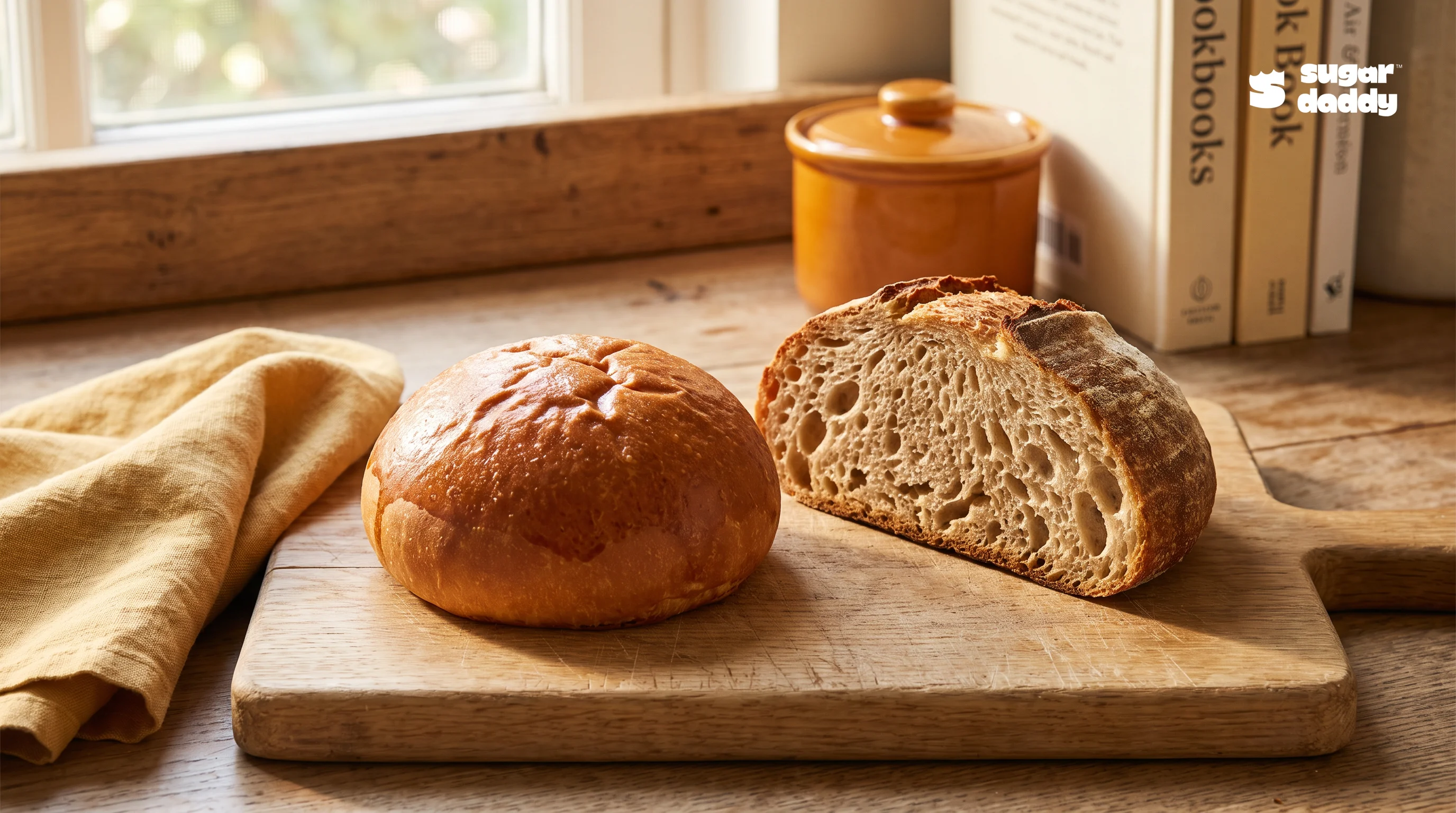
| Feature | Regular Bread | Brioche |
|---|---|---|
| Core Ingredients | Flour, water, yeast, and salt. | Flour, yeast, salt, eggs, butter, and sugar. |
| Texture | Chewy and robust with a defined crust. | Pillowy, tender, and melt-in-your-mouth. |
| Flavor Profile | Mild, yeasty, savory, or tangy. | Rich, buttery, and subtly sweet. |
| Best Uses | Sandwiches, toast, and savory dipping. | Desserts, French toast, and gourmet buns. |
Culinary Uses: When to Choose Brioche, and When to Stick with Bread
Choosing between brioche and standard bread depends entirely on the culinary experience you want to create. Brioche thrives when the goal is pure indulgence. Its buttery, delicate crumb makes it the ultimate foundation for thick-cut French toast, rich bread puddings, and decadent dessert bases that need to absorb flavors without turning into mush. To understand how this rich pastry-bread hybrid blurs the line between meals and treats, you can discover if brioche counts as a dessert.
This richness also makes brioche a favorite for gourmet savory dishes, such as high-end burger buns or elevated egg sandwiches, where the subtle sweetness contrasts beautifully with salty fillings. Whether you want to smother it in chocolate hazelnut spread or stack it with fresh berries, you can explore the best brioche toppings to elevate your next culinary creation.
Standard bread, on the other hand, remains the reliable workhorse for everyday meals. A sturdy sourdough, a rustic baguette, or a simple sliced loaf is built to handle the daily grind. These breads excel at supporting heavy, multi-layered deli sandwiches, soaking up savory pasta sauces, or serving as a crunchy, low-key companion to a warm bowl of soup. When you need structural integrity and a clean, yeast-forward flavor that lets other ingredients lead, classic bread is the ideal choice.
Is Brioche "Healthier" or "Unhealthier" Than Regular Bread?
Evaluating the nutritional value of brioche requires looking closely at its rich ingredient profile. Because it is packed with butter, eggs, and sugar, brioche is transitionally more indulgent and contains higher levels of fats and carbohydrates than standard loaves. This makes it a delicious treat designed for pure enjoyment rather than a basic daily staple.
Regular bread, on the other hand, spans a massive nutritional spectrum. A slice of highly processed white sandwich bread offers different dietary value compared to a dense, fiber-rich whole grain loaf or a naturally fermented sourdough. Comparing brioche to regular bread depends heavily on which specific loaf you are holding.
Ultimately, whether one is healthier depends entirely on your personal dietary goals, portion sizes, and overall lifestyle. If you are looking for a high-fiber option to fuel your morning, a rustic whole-grain bread is the logical choice. But when you want to satisfy a late-night craving with a soft, comforting bite, the pure satisfaction of a pillowy brioche serves a different, equally valid purpose.
Your Late-Night Craving: Why Brioche Hits Different in Da Nang
When the clock strikes midnight in Da Nang, a standard slice of toast simply will not cut it. The deep, buttery richness and cloud-like texture of brioche make it uniquely suited to satisfy a late-night craving. Unlike regular bread, which can feel heavy or dry after hours, this enriched pastry-bread hybrid offers a melt-in-your-mouth comfort that feels like a true indulgence. It turns a simple late-night snack into a luxurious evening wind-down.
Its natural versatility means you do not have to limit your palate. Whether you are craving a decadent sweet creation loaded with rich toppings or a comforting savory bite to end the night, brioche adapts beautifully to both worlds. Once you understand the physical distinction between basic bread and this premium French creation, it becomes easy to recognize why it stands out among the best French desserts in Da Nang.
Finding the right balance of texture and flavor is essential when you are ordering in. Knowing how to choose the perfect dessert for delivery ensures your treat arrives as pillowy, fresh, and satisfying as intended. When you want something more exciting than standard pantry staples to get you through the late hours, choosing a freshly prepared brioche treat elevates your entire evening routine.
Choose standard bread when you need a sturdy, neutral partner for your morning eggs or a thick deli sandwich. But when you want to satisfy a deep, luxurious craving late at night, skip the boring toast and reach for a buttery, pillowy brioche base instead. You can experience this perfect pastry-bread balance tonight by ordering a freshly prepared, sweet brioche creation delivered straight to your door in Da Nang.